

If you’re considering a career as a dental assistant in Florida, you may wonder: Are dental assistants allowed to clean teeth? It’s a common question—and the answer is a bit nuanced.
While dental assistants play an essential support role in dental offices, certain procedures—like teeth cleaning—are restricted by law. In this post, we’ll explain:
-
What dental assistants in Florida can and can’t do
-
The legal limitations around cleaning teeth
-
How to expand your role through certifications
Understanding the Role of a Dental Assistant
Dental assistants are a vital part of the dental team, helping dentists deliver efficient, quality care. Their responsibilities often include:
-
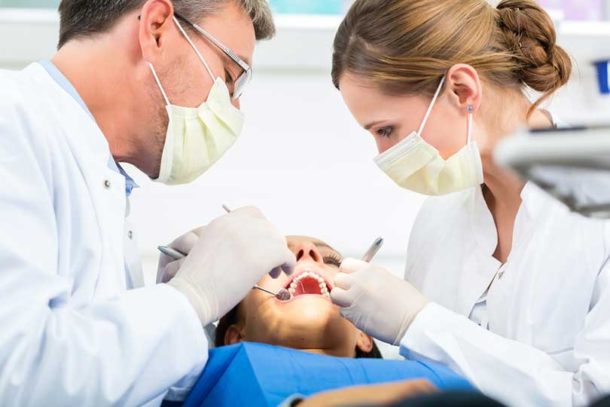
Assisting during procedures: Prepping the treatment area, handing tools to the dentist, and supporting patient comfort
-
Taking X-rays: Using radiology equipment to capture dental images
-
Sterilizing equipment: Ensuring instruments and treatment areas remain sterile
-
Patient care: Offering post-procedure instructions and supporting the overall patient experience
But what about cleaning teeth—also called prophylaxis? That’s where the legal boundaries come in.
So, Can Dental Assistants Clean Teeth in Florida?
In short: No, unless they hold very specific additional certifications—and even then, it’s limited.
In Florida, cleaning teeth (the removal of plaque, tartar, and stains) is considered a preventive procedure that falls under the scope of licensed dental hygienists. Dental assistants are not authorized to perform prophylaxis, even if they’re certified in expanded functions.
Dental Hygienists vs. Dental Assistants
Though they work side-by-side in the dental office, dental hygienists and assistants have distinct roles.
Dental Assistants
Support the dentist with:
-
Procedure prep and assistance
-
X-rays (with certification)
-
Instrument sterilization
-
Patient education
-
Administrative duties
They cannot clean teeth unless they receive special training in coronal polishing (which is not full cleaning).
Dental Hygienists
Licensed professionals trained to:
-
Perform teeth cleanings
-
Identify signs of oral disease
-
Apply fluoride and sealants
-
Educate patients on oral hygiene
They complete more in-depth training and are licensed to perform preventive dental procedures independently.
What Dental Assistants Can Do in Florida
While they can’t clean teeth, dental assistants in Florida are trained to:
-
Assist in restorative procedures
-
Take and process dental X-rays (with certification)
-
Sterilize tools and maintain infection control
-
Educate patients before and after procedures
-
Support the dentist with expanded functions if certified
Expanding Your Role as a Dental Assistant
If you’re looking to grow your responsibilities, Florida offers certifications that expand what dental assistants can do:
EFDA Certification
With Expanded Functions Dental Assistant (EFDA) certification, you can:
-
Apply sealants and fluoride
-
Place temporary fillings
-
Take impressions
However, this still does not allow you to clean teeth.
Radiology Certification
Enables you to legally take dental X-rays in Florida.
Coronal Polishing Certification
Some programs offer this advanced certification. While it’s not full cleaning, it allows you to remove plaque and stains from the visible surfaces of teeth—often in preparation for other procedures. This requires additional training and dentist supervision.
Important Takeaways for Aspiring Dental Assistants
If you’re planning to become a dental assistant in Florida, it’s essential to understand your scope of practice. While you can’t perform full cleanings, you play a crucial role in the dental office—and you have plenty of growth opportunities through certifications.
Want to clean teeth as part of your daily role? You’ll need to become a licensed dental hygienist, which involves more education and a different licensing path.
Conclusion
Dental assistants in Florida are not allowed to perform full teeth cleanings—this task is reserved for licensed dental hygienists. However, with certifications like EFDA, X-ray, and coronal polishing, dental assistants can still contribute significantly to patient care and gain specialized skills.
If you’re passionate about helping people, working in healthcare, and being part of a dynamic team, dental assisting is a fulfilling and respected career path. And if you’re interested in eventually performing cleanings, becoming a dental hygienist might be your next step.